Traverse County Farm Family Receive Water Quality Certification
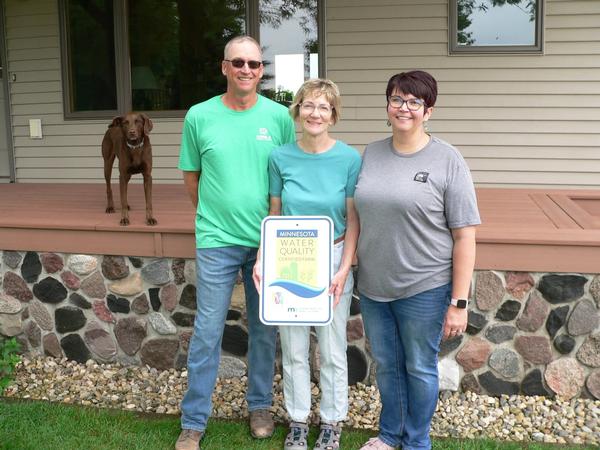
Kevin, Ruth, and Matthew Pederson of Wheaton, Minnesota, have recently become water quality certified through the Minnesota Agricultural Water Quality Certification Program (MAWQCP). The program, which originated in 2014, is a voluntary process that has certified over 1,500 producers across the state for utilizing conservation-minded practices in their operations to protect water quality. Each applicant is required to undergo an in-depth examination of field characteristics, crop rotation history, nutrients, and pesticide management techniques as well as tillage and irrigation practices depending on their unique farming operation.
“This certification was an internal milestone that we wanted to achieve,” Kevin explained. “And being apart of the process has helped our farm to become more efficient and productive.”
Both Kevin and his wife, Ruth, grew up on farmsteads but maintained full-time off-farm jobs prior to their current farming status. It was Ruth’s parents, George and Diane Lande, and brother Paul, who reined them back to their agricultural roots. Before long, Kevin began working for Lande High Prairie Farm Inc., and in 1996, Kevin and Ruth purchased a neighboring farm. They currently grow alfalfa, corn, soybeans, and sometimes wheat alongside their small custom grazing enterprise. Their son, Matthew, currently works at an off-farm job but helps with the newer technology and during peak seasons in hopes of becoming the next generation to farm the land.
The Pedersons practice both no-till and reduced tillage on their cropland acres which allows for crop residue to remain on the landscape to help prevent erosion. They also utilize variable rate technology when fertilizing and planting, apply the John Deere "See & Spray" technology to specifically target plants that are weeds and reduce the amount of herbicide applied in their fields, and maintain field windbreaks and filter strips. Because of the family connection, the Pedersons value the shared ideas between Lande High Prairie Farm Inc. on implementing different practices. They also appreciate the cooperation of landlords and neighbors to implement the conservation practices mentioned above. In the future, they hope to increase their no-till acres and improve on their fertilization efficiency.
“We live on one of the ravines that lead toward Lake Traverse, so we are first-hand witnesses to what’s good and bad that go into it,” Kevin said. “Which is why we are always trying to do more things that help the environment where we live.”
Reduced, or conservation tillage, is any form of tillage where 30% or more of the soil is covered with crop residue whereas no-till is when crops are planting without tilling the soil entirely. These conservation practices aim to increase soil organic matter, improve soil health, and reduce soil erosion; thereby protecting the water quality in the surrounding area.
Overall, because of these best management practices implicated by the Pedersons, they officially became certified water quality producers on February 25, 2026.
“Every farm is different – they have different goals, priories, and challenges,” Kevin said. “But I would still encourage them to start the MAWQCP process to see what areas they are doing well in and the places that need improvement.”
Posted in: MAWQCP