Lande High Prairie Farm Inc. Becomes Water Quality Certified
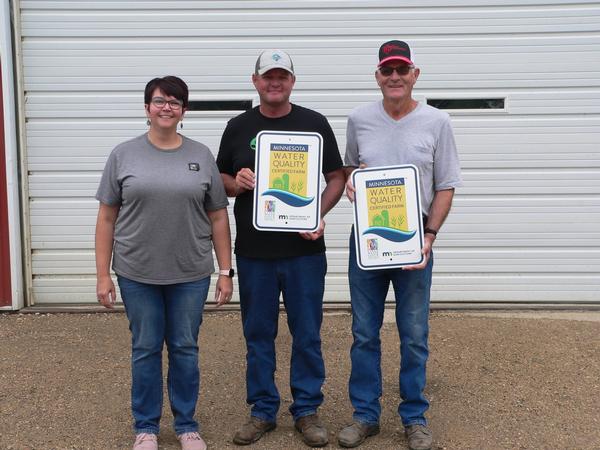
David and Paul Lande of Lande’s High Prairie Farm Inc. have recently joined over 1,500 producers to become certified as a water quality steward through the Minnesota Agricultural Water Quality Certification Program (MAWQCP). This decade-old program is a voluntary process that certifies farming operations that utilize conservation-minded practices to protect water quality throughout Minnesota for 10 years. Throughout that time, producers are deemed to be compliant with any new water quality rules and maintain priority for technical assistance to implement more practices that promote water quality.
“Our farm has always been as conservation oriented as possible,” David Lande said. “And this program reassures us that we are doing everything we can for the surrounding land and water.”
Located in Wheaton, Minnesota, Lande High Prairie Farm Inc. encompasses approximately 3,000 acres of cropland and 107 acres within the Conservation Reserve Program (CRP). To aid in reducing the loss of the soil surface, Lande implements minimal tillage to maintain crop residue while also maintaining miles of field windbreaks, buffer strips, and pollinator habitat.
By definition, minimal, or conservation tillage, is any form of tillage where 30% or more of the soil is covered with crop residue. This conservation practice aims to increase soil organic matter, improve soil health, and reduce soil erosion; thereby protecting the water quality in the surrounding area.
In addition, Lande High Prairie Farm Inc uses grid soil sampling results to implement Variable Rate Technology for their fertilizer applications, limiting unnecessary applications of phosphorus, potash, and lime. The John Deere “see and spray” technology is used to specifically target weeds in order to reduce the amount of herbicide applied within their fields. And cover crops, such as winter rye, turnips, and radishes, are also planted on fields that are prone to flooding, resulting in a ‘prevent plant’ designation that also provides the same soil health benefits as mentioned previously.
“Overall, the Minnesota Ag Water Quality Certification Program showcases that farmers like us are being responsible toward our land and water, especially when it comes to the herbicides and nutrients we apply,” David Lande said. “We have to drink the water too, so it’s best to be conservation-oriented for it.”
Posted in: MAWQCP