Father-Son Duo Gain Water Quality Recertifications
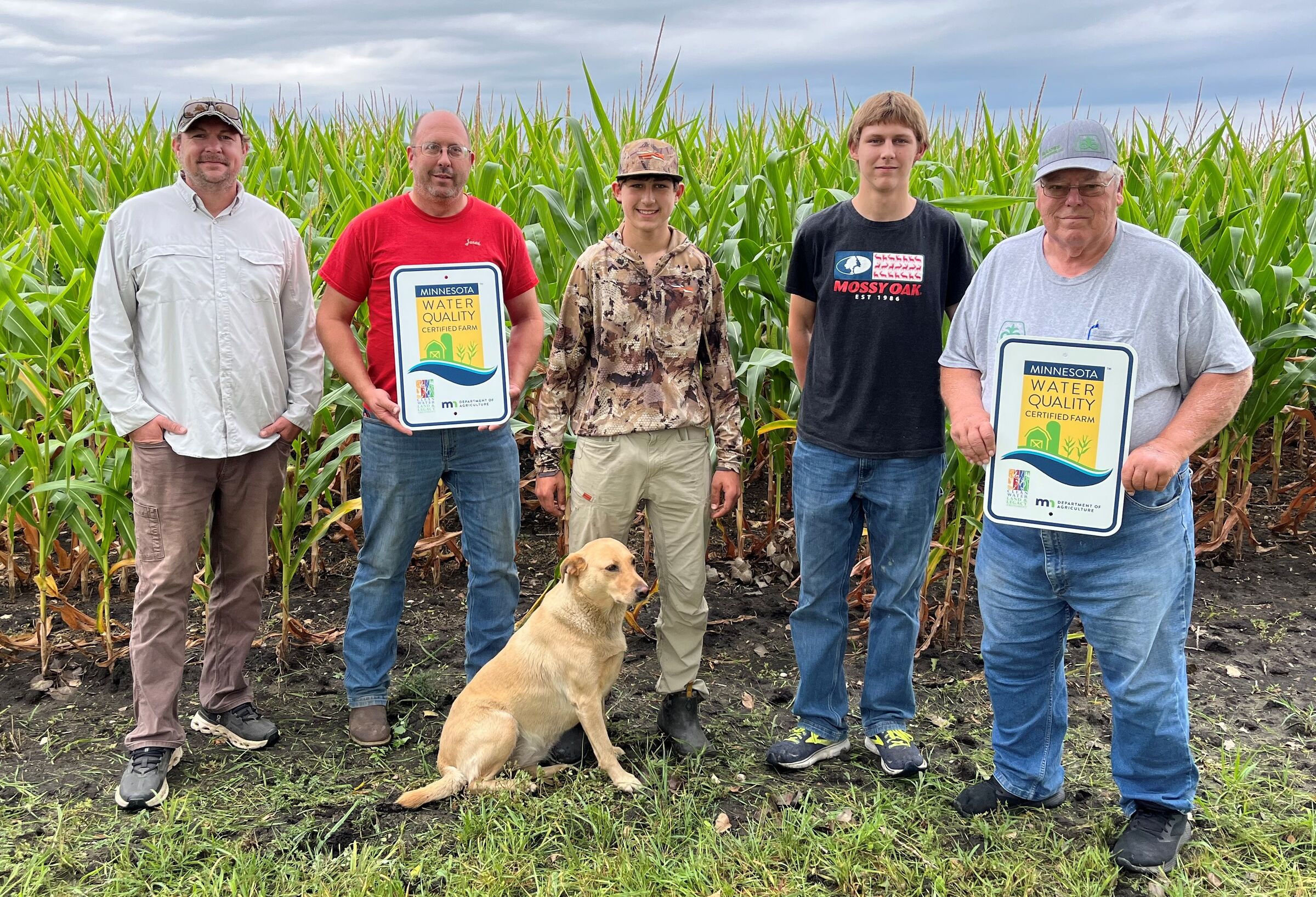
Since 2014, the Minnesota Agricultural Water Quality Certification Program (MAWQP) has certified producers who have implemented conservation-minded practices in their farming operations to protect water quality. And now, as the certification period for the voluntary program is 10 years, it is time for the initial water-quality-certified farms to be reassessed and, hopefully, recertified for another decade. The first producers certified under MAWQCP, Jared and Gerald Nordick, have recently completed their operation’s re-examination and have once again been declared water quality certified.
“It's good to see the program is still around,” Jared said. “Because sometimes in production agriculture it’s hard to find anything good. But this recertification means that we’re still able to adapt to what is needed for conservation.”
Gerald Nordick was always conservation minded when he started farming in 1972. Jared followed in his footsteps in 1993 where the duo primarily raise corn and soybeans in Wilkin County. They practice mulch tillage on their approximately 1,500 acres while also maintaining filter strips, field windbreaks, and water and sediment control basins.
Mulch tillage is a type of reduced tillage that manages the amount and distribution of crop and plant residue on the soil surface. It helps reduce erosion and can help improve soil health. Likewise, windbreaks (rows of trees or shrubs) are living structures that prevent wind erosion, while filter strips are stretches of permanently vegetated land that help filter contaminants in surface water. Water and control basins are engineered embankments that trap runoff and sediment before slowly releasing it to prevent erosion.
Looking back, Gerald and Jared appreciate how open-minded they’ve become since beginning the MAWQCP process twelve years ago. It has also encouraged them to attend meetings and events to learn more about conservation practices and soil erosion prevention. In the future, they are hopeful the knowledge will help them incorporate new practices, such as cover crops or conservation crop rotation, as their operation continues to adapt.
“MAWQCP helps producers pick up their share of the conservation pie that improves soil health and water quality while also showing producers how they can make an impact,” Jared said. “It’s another tool in the toolbox to help producers become better farmers or help a failing part of an operation become better.”