One Watershed One Plan Grant Projects

Redeye River Surface Water Assessment Grant (SWAG)
This project utilized eight surface water sites in the Redeye River Watershed to collect chemical samples and complete field analysis to help determine the health of the streams in the watershed. The eight sites were equally distributed in Otter Tail and Wadena Counties, including sample sites on Bluff Creek, Leaf River, Redeye River, Oak Creek, and the Wing River. The parameters we tested at each site included TSS, TP, Chloride, hardness, E. Coli, Secchi tube, specific conductance, temperature, pH, DO, and additional perception assessments. The results from this data collection will assist us in reaching our One Watershed One Plan goals of reducing bacteria, phosphorus, sediment, and nitrogen, while also determining focal areas for implementing best management practices in the future.
To learn more about the Surface Water Assessment Grant Project and its results, please view out Story Map, using the link below.
Redeye Culvert Inventory
From 2023 through 2025, staff from the East Otter Tail and Wadena Soil & Water Conservation Districts have completed a physical inventory of culverts located along public roads within the Red Eye River Watershed. This project was supported through funding from the Minnesota Pollution Control Agency (MPCA) and fulfills a priority action identified in the Red Eye Comprehensive Watershed Management Plan.
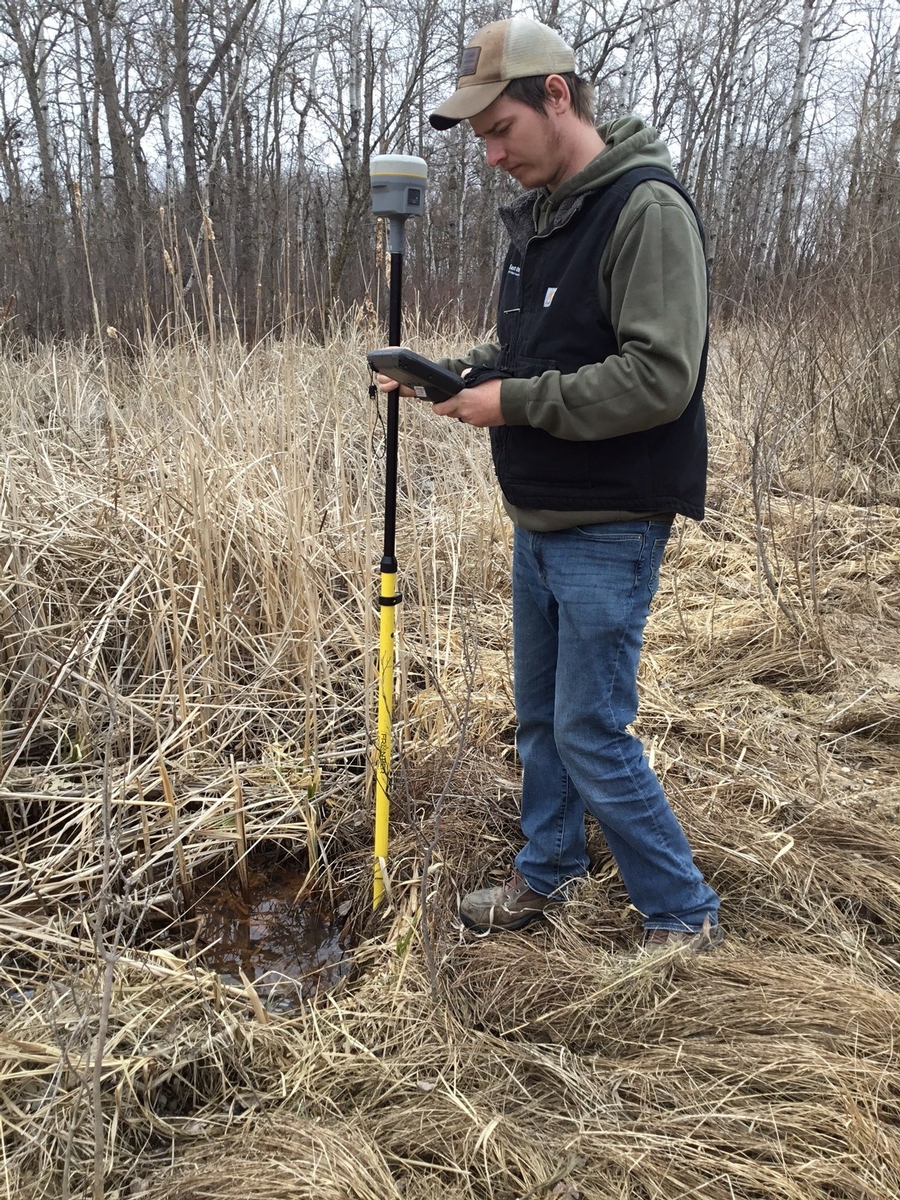
For this project, SWCD staff drove and surveyed roads throughout the watershed using GPS equipment and digital mapping tools. At each culvert, staff recorded GPS coordinates, invert elevations, culvert size and type, and the general condition. This work was done to support local road authorities in planning maintenance, identifying undersized or failing structures, and coordinating replacement needs across jurisdictions.
Using this information, a web-based map was developed to share the results of the inventory with townships and other road authorities. The map can be viewed using the following link.
We do want to note that there are likely additional culverts that were not located due to being buried, obscured by vegetation, or positioned in less visible areas.