One Watershed One Plans

Leaf, Wing, Redeye Watershed
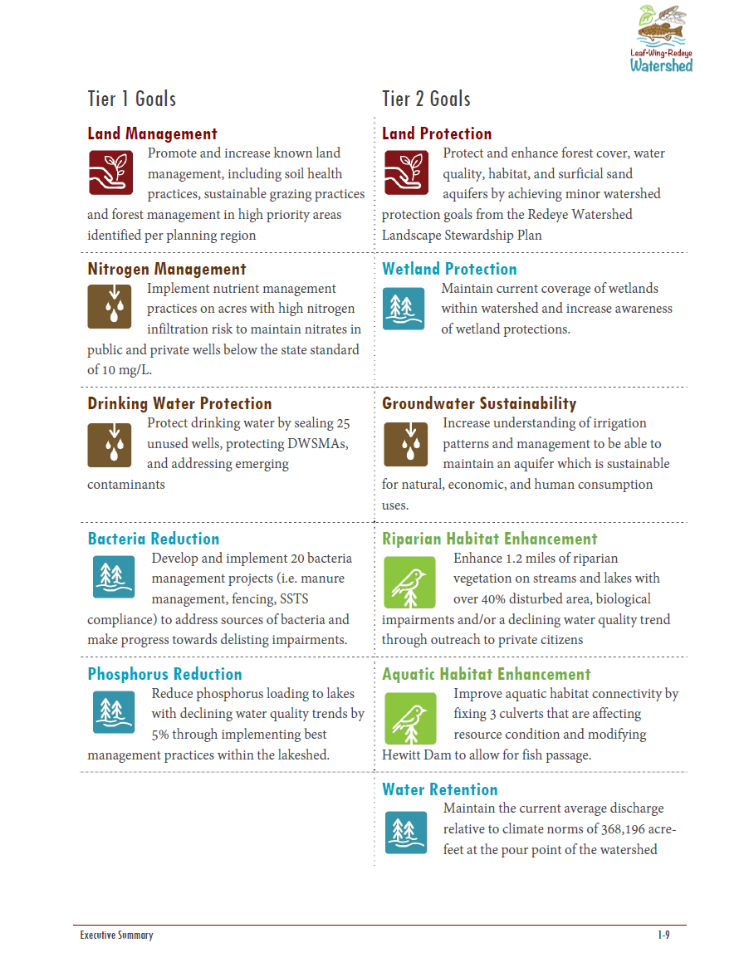
The Redeye River Watershed contains three major river systems: The Redeye, Leaf, and Wing Rivers. The Redeye River flows southeast from Wolf Lake (in Becker County) to the confluence with the Leaf River halfway between Aldrich and Nimrod. The Leaf River flows east from the Leaf Chain of Lakes (in Otter Tail County) to the confluence with the Crow Wing River north of Staples. The Wing River flows northeast, starting near Parkers Prairie and flowing into the Leaf River north of Verndale.
The landscape is varied, with forests dominating the northern half of the watershed and agriculture the dominant land use in the southern half. Wetlands dot the landscape, including the Leaf River Valley. Lakes are absent from much of the watershed, only forming around the edges of the watershed.
The Leaf, Wing, Redeye 1W1P was approved on August 26th, 2020, by the Board of Water and Soil Resources. The final plan is intended to provide a guide to local resource professionals, including SWCD and county staff, on where to spend their time and money to get the best results. It will also help us balance all of these competing land features and differing land uses for a healthy watershed and be a key tool in helping us protect our rivers and lakes.
Overall, the final document outlines the priority issues, areas, and practices within the watershed. It is intended to direct and track our progress improving water quality over the next ten years (until 2031).
Crow Wing River Watershed
The Crow Wing River Watershed (CWRW) is located in north-central Minnesota, where it drains nearly 2,000 square miles with numerous rivers, lakes, and forests. The Crow Wing River eventually joins the Mississippi River at Crow Wing State Park, meaning that improving and protecting water quality in the Crow Wing River will influence the quality of downstream waters. The watershed includes Becker, Cass, Clearwater, Crow Wing, Hubbard, Morrison, Otter Tail, Todd, and Wadena Counties along with a portion of the White Earth Nation.
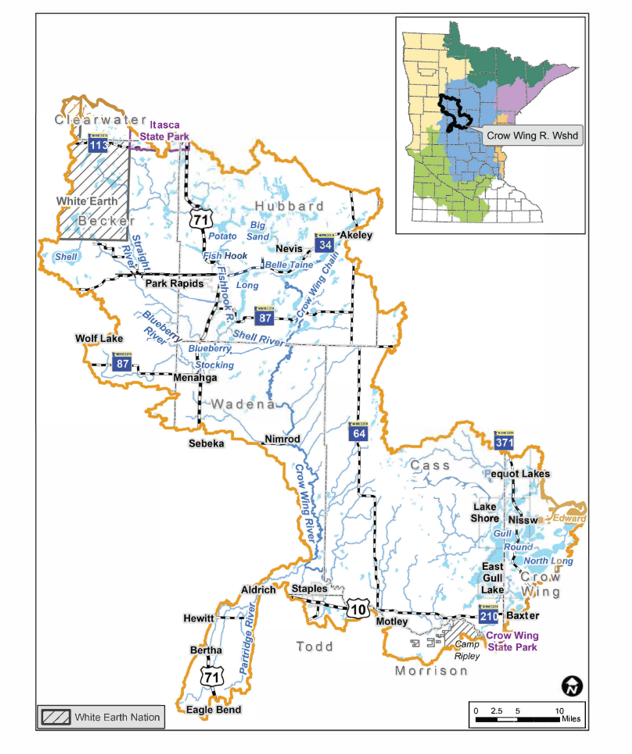
About two-thirds of the watershed is covered in forests or wetlands, which provides water storage, protects surface and groundwater quality, and provides habitat. The other third is productive land used for agriculture. The CWRW has over 400 lakes and 1,600 miles of streams, and many of these support aquatic life and recreation.
The completed watershed plan outlines the priority issues and practices within the watershed. It is intended to guide and track the progress of improving water quality over the next ten years (until 2035).
Funding for this project was provided by the Clean Water, Land, and Legacy Amendment. For more information visit: